 Photoshop
 Maya
Maya ZBrush
 Houdini
 Unreal Engine
 Substance Painter
 Blender
 Nuke
Nuke Arnold
 KeyShot
 Substance Designer
 Mari
Mari Marvelous Designer
 Marmoset Toolbag
 3DCoat
 After Effects
 Faceform Wrap
 Lightroom
 OctaneRender
 SpeedTree
 Daz 3D
 Agisoft Metashape
 Modo
Modo RealityCapture
 Gaea
Gaea Cinema 4D
 Gravity Sketch
 Premiere
 Procreate
 Substance 3D Modeler
 Katana
 Mudbox
 Krita
Krita World Creator
 Yeti
Yeti Ziva VFX
 SketchBook
 Quixel DDO
 Mixamo
 Natron
 Quixel Bridge
 Quixel Megascans
 Adobe Medium
 Quixel Mixer
 SynthEyes
 Clip Studio Paint
 SketchUp
 Unity
Unity Gaffer
 Massive
 Materialize
 Ornatrix
 PreForm
 Corel Painter
 Moi 3D
 QuickTime
 Storyboard Pro
 TreeIt
 animBot
 ReCap
ReCap Meshmixer
 DaVinci Resolve
 xNormal
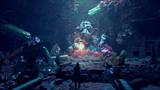


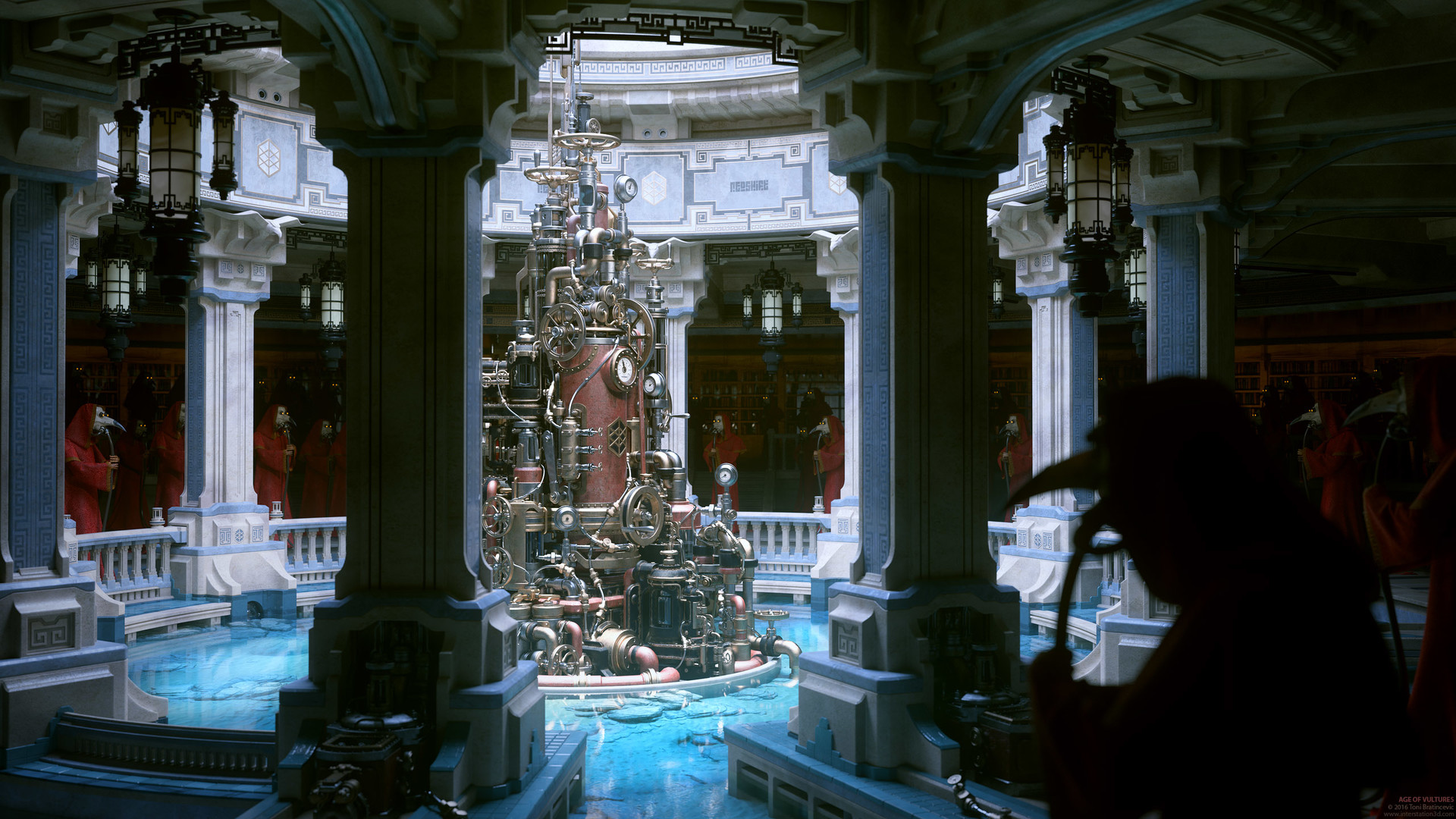
This title offers insight into the environment workflows of Toni Bratincevic, Senior Environment Modeler at Blizzard Entertainment, who shares his techniques for creating an epic 3D environment illustration with five hours of lecture and demonstration.
In this thorough workshop, Toni explains the complete creation process for his latest personal project, detailing all the key stages from concept through to final illustration. He reveals how to organize 3D environments for efficient scene management and rendering, and demonstrates how to build materials and create effective material libraries.
Procedural modeling is also a key player in this comprehensive workshop, used to build up and scatter environmental elements throughout the scene for convincing results. Sharing his non-destructive workflow techniques, Toni demonstrates how the RailClone and ForestPack plugins for 3ds Max are effective tools for designing and developing impressive environments, and his detailed lessons delve into developing futuristic 3D architecture.
Concluding the workshop, Toni’s masterclass in compositing covers color correction and post-production techniques using Fusion and provides all the skills needed to bring your fantastical, imaginative environments to life.
12 Lessons
In this workshop, Tony Bratincevic demonstrates how personal projects serve as crucial career development tools, especially when creating polished work that showcases individual capabilities. Tony’s own career trajectory was enabled by posting quality personal work online to attract industry attention. This session demonstrates a complete environment modeling process using the "Dominus 5" project to show how to evolve rough ideas into polished environments through systematic workflows.
Duration: 12m 24s

The iterative 3D illustration process used by Tony Bratincevic emphasizes flexibility and continuous refinement over linear workflows. By cycling through production phases and locking cameras early, artists efficiently focus effort on critical elements while maintaining creative freedom. Although creating custom assets takes more time, it leads to more original work and builds skills for future projects.
Duration: 21m 41s

Tony Bratincevic teaches that narrative structure transforms 3D illustration from a visual craft into a medium that communicates meaning. By grounding creative decisions in an underlying story, artists create work that connects with audiences emotionally and intellectually. This approach sustains motivation during long projects and proves that impactful art combines technical skill with purposeful storytelling.
Duration: 14m 10s

Artists explore sophisticated material creation workflows that prioritize flexibility and efficiency in architectural visualization. Tony shows how to create complex, photorealistic materials using ID-based libraries and world-space projection. These techniques allow artists to apply and iterate materials across large-scale scenes without tedious UV mapping, maintaining realistic variation and detail.
Duration: 55m 39s

This lesson demonstrates that creating realistic 3D trees requires an understanding of both technical workflows and natural growth patterns. Tony shows that photorealism stems from strategic randomization through effectors and modifiers. By building a parametric system, artists efficiently generate multiple tree variations by adjusting seed values, making the workflow production-efficient.
Duration: 34m 20s

Tony utilizes Forest Pack as an essential tool for scattering massive numbers of instances in 3ds Max while maintaining performance. The procedural workflow allows artists to make real-time adjustments to distribution patterns and randomization. By combining V-Ray proxies with distribution controls, artists achieve realistic, optimized scenes that are impractical to create through manual placement.
Duration: 25m 32s

RailClone provides a powerful way to create parametric architectural elements that follow paths or repeat along curves. Tony shows that while the learning curve increases with complexity, reusable presets save significant time in environment design. This experimentation demonstrates how technical tools inspire artistic direction in 3D scene building.
Duration: 15m 11s

This workflow demonstrates a procedural approach to scene building that maximizes flexibility. Tony shows how to control multiple complex systems through a single editable spline, allowing artists to iterate on compositions in seconds. This modular, non-destructive method ensures professional 3D environments maintain high quality while staying efficient.
Duration: 12m 34s

This lesson demonstrates an efficient, iterative approach to environment art that balances technical skill with design thinking. Tony emphasizes non-destructive workflows and constant visual validation through renders to ensure creative freedom. Artists use a three-level detail hierarchy to maintain visual interest at all distances while avoiding over-detailing at the expense of composition.
Duration: 38m 36s

Tony showcases a professional 3ds Max workflow prioritizing efficiency and organization. Using a powerful modifier-based system for real-time procedural modeling, Tony demonstrates how to manage complex architectural scenes. Through custom scripts and strategic use of XRef objects, artists maintain performance and editability throughout the production process.
Duration: 41m 53s

By using the PRISM Render Layer Manager, Tony automates multi-camera rendering with separated passes. This setup allows artists to render overnight without supervision while maintaining the flexibility to adjust lighting and color during compositing. This separation of stages enables rapid fixes without the need for costly re-renders.
Duration: 29m 47s

This lesson showcases a professional compositing workflow that prioritizes subtlety. Tony demonstrates that architectural visualization relies on small, targeted adjustments rather than heavy-handed processing. By using Blackmagic Fusion, artists utilize a powerful node-based alternative to layer-based editing, gaining the non-destructive flexibility ideal for post-production.
Duration: 22m 42s

Primary tools
For this workshop you’ll need:


* Note that these programs and materials will not be supplied with the course.
Skills Covered
Who’s this Workshop for?
This workshop is designed for intermediate to advanced 3D environment artists, concept designers, and technical artists working in game development, film, or the entertainment industry. Those with foundational 3ds Max knowledge and experience in environment creation will gain the most immediate value from this workshop.
Aspiring environment artists and seasoned professionals looking to expand their procedural modeling skills will also benefit significantly. The comprehensive workflow insights from a Blizzard Entertainment veteran provide invaluable production experience that can elevate any artist's environmental storytelling and technical capabilities in creating compelling digital worlds.
Learning Outcomes
By finishing this workshop, artists will have developed the complete pipeline for creating epic 3D environments using industry-standard procedural workflows and compositing techniques.
Key skills include:
- How to organize complex 3D environments for efficient scene management and optimized rendering workflows.
- How to build comprehensive material libraries and develop effective materials for environmental assets.
- How to utilize RailClone and ForestPack plugins for non-destructive procedural modeling in 3ds Max.
- How to scatter and distribute environmental elements throughout scenes for realistic, convincing results.
- How to design and develop futuristic 3D architecture using advanced procedural modeling techniques.
- How to apply color correction and post-production compositing techniques using Fusion for final illustrations.